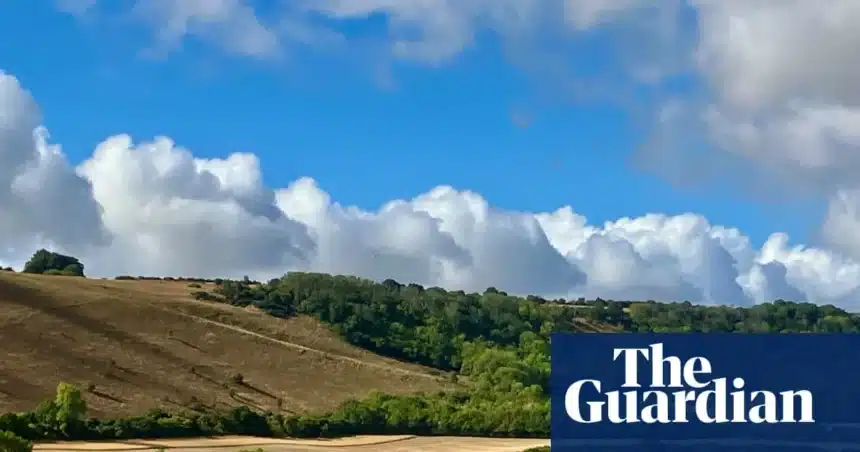
After an extended period of intense heat and drought, the arrival of rain has dramatically altered the appearance and scent of the countryside. The land, which had taken on a stark, yellow-ochre hue reminiscent of apocalyptic fiction, is now undergoing a visible transformation. This shift marks a significant change from the parched conditions that characterized the summer months, impacting vegetation and the very soil itself.
The Landscape Before the Rain
Throughout the summer, the absence of rainfall left fields and grassy verges looking unnaturally dry and brittle. In some areas, the ground cracked so deeply that farmers could easily insert their arms into the fissures. While resilient trees like ancient field oaks appeared largely unaffected, more shallow-rooted species, such as beech trees common on the downs, began to shed their leaves prematurely. These trees, often shaped like giant caterpillars, dropped withered foliage and an insufficient crop of beechnuts. Field maples showed signs of distress with gnarly branches and a loss of leaves, while sycamores displayed browning leaf curl, their edges turning brown against the remaining green. Even within managed woodlands, typically more sheltered environments, plants like laurel showed signs of wilting.
The dry conditions also contributed to an increase in field fires. Black smoke was observed drifting from various locations, including Enham Alamein, Greenham Common, and the New Forest. Further afield, on Salisbury Plain in Wiltshire, white smoke veiled the landscape, reaching as far as the historic village of Avebury. The iconic Westbury White Horse, a chalk figure famously depicted in art, was reportedly surrounded by flames or the scorched earth of the adjacent Bratton Camp, creating a scene described as apocalyptic. The lingering smell of smoke from these fires served as a potent reminder of the dry conditions and the destructive potential of uncontrolled blazes.
Sensory Memories and Fire
For some, the smell of smoke carries personal significance, evoking memories of danger, comfort, and safety. The scent can be linked to childhood recollections of a parent who worked as a firefighter, the smell of their damp, sooty uniform upon returning home, and the sound of the alarm bell signaling an emergency. These olfactory memories highlight a deep connection between the smell of burning and a sense of heightened awareness and personal history, particularly in the context of significant fire events like the New Forest conflagration of 1976 or the Windsor Castle blaze in 1992.
The Impact of Rainfall
The recent rainfall, initially appearing as teasing showers from towering cumulus clouds resembling sailing ships, has begun to saturate the parched earth. The landscape, once a uniform yellow-ochre, is now darkening to an unfamiliar brown, akin to moorland. This change in color signifies the land’s absorption of much-needed moisture.
However, the return of heat following the rain has brought with it a new, distinct scent: ammonia. During the dry summer, sheep’s urine, which had remained undiluted on the surface of the dry ground, became concentrated. When the rain eventually fell, it reanimated this scent, mingling it with damp dust and the baked grass. The resulting aroma is described as heady and confusing, a complex olfactory signature of the land rehydrating after a prolonged drought.
Ecological Observations
The drought’s impact was evident in the vegetation. Bird’s-foot trefoil and chicory, typically found in grassy margins, were seen dotted across the otherwise dead pasture. The chicory plants, notably, were growing on unusually short stems, indicating the stress they endured. The resilience of some flora, like the sentinel field oaks, contrasted sharply with the vulnerability of others. The shedding of leaves and poor nut production in beech and maple trees underscored the widespread effect of the prolonged dry spell.
The return of rain offers a reprieve, allowing the ecosystem to begin its recovery. The darkening of the soil and the emergence of new scents are indicators of this ongoing process. While the immediate transformation is striking, the long-term effects on plant life and soil health will continue to unfold as the seasons change.
Conclusion: A Land Reawakened
The end of the summer drought, marked by the arrival of significant rainfall, has brought about a profound change in the rural landscape. From the visual transformation of the land’s color to the emergence of new, complex scents, the effects are palpable. The parched earth, cracked and yellowed, is now absorbing moisture, signaling a return to life. The memory of summer fires and the lingering smell of smoke are being replaced by the earthy, ammonia-tinged aroma of a land reawakening. This period of intense heat followed by restorative rain highlights the delicate balance of the natural environment and its dramatic response to climatic conditions.