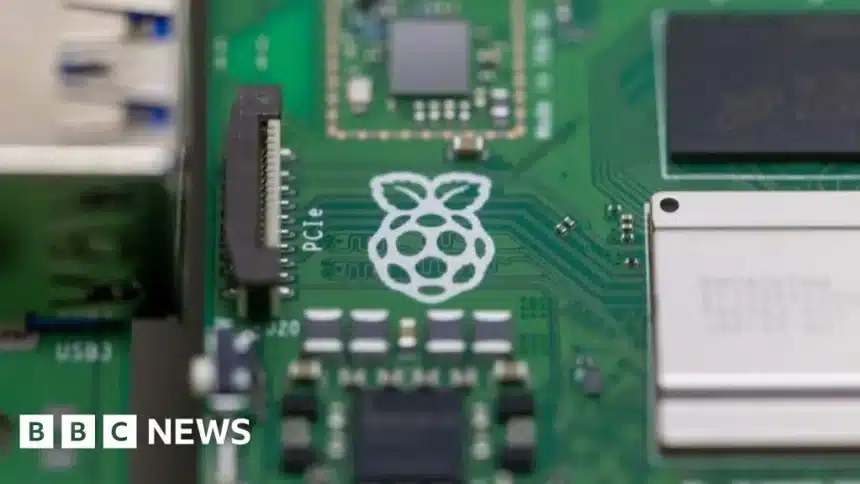
Raspberry Pi has significantly boosted its profit outlook, citing robust demand for its compact computing devices driven by the burgeoning artificial intelligence sector. The Cambridge-based technology firm anticipates delivering adjusted earnings of no less than $38 million for the first half of 2026.
This upward revision in financial expectations has had a notable impact on the company’s stock performance. Shares experienced a surge of up to 25% in early trading on Friday, propelling its market capitalization to approximately £2 billion.
AI Applications Drive Demand for Compact Computers
The credit card-sized computers manufactured by Raspberry Pi are increasingly finding new applications in the development of AI-powered devices. These affordable machines are emerging as a cost-effective alternative to more specialized and expensive hardware, making advanced AI development more accessible.
The company has observed a substantial increase in the value of its stock, which has more than tripled since the beginning of the year. This impressive growth underscores the company’s strong market position.
Robust Sales and Future Outlook
Recent financial performance is attributed to “robust demand for its products,” with projections indicating sales of over four million units for the half-year period. This strong sales trajectory positions the company to achieve earnings that are “significantly ahead of current market expectations” for the entirety of 2026.
Raspberry Pi’s devices are recognized as the best-selling computers produced by a UK firm and have historically been popular among hobbyist programmers. In more recent times, enthusiasts have begun leveraging these low-cost machines for projects such as hosting AI assistants, including the OpenClaw platform.
Component Costs and Price Adjustments
The company has implemented several price increases across its product range in recent months. These adjustments are a response to the global shortage of memory chips, a situation exacerbated by substantial demand from AI data centers, which has driven up component costs.