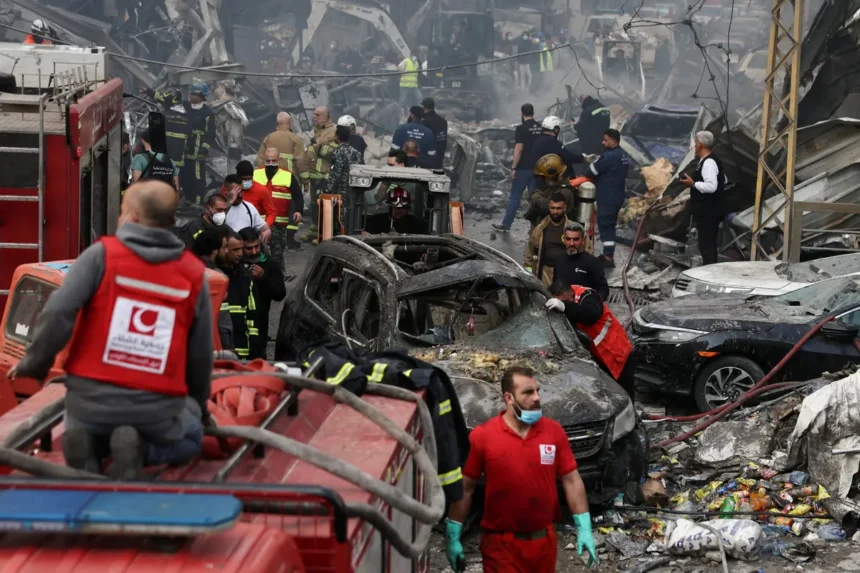
Israeli airstrikes targeted residential areas and commercial zones in central Beirut, southern Lebanon, and the eastern Bekaa Valley, launching over 100 attacks in just 10 minutes. The barrage came hours after a ceasefire announcement involving the US and Israel, which Israeli officials state does not apply to operations against Hezbollah.
Scenes of Chaos in Beirut
Black smoke billows over the seaside capital as explosions echo through the streets, disrupting afternoon traffic under clear skies. Ambulances rush to sites of open flames, where emergency responders sift through charred vehicles and damaged apartment buildings. Strikes hit busy locations, triggering panic among residents and shoppers.
Lebanon’s National News Agency confirms attacks on at least five neighborhoods in central and coastal Beirut. The country’s minister of social affairs, Haneed Sayed, notes the strikes occurred in the heart of Beirut, home to half of Lebanon’s internally displaced people. She adds that the government stands ready to negotiate with Israel to end hostilities, echoing an earlier offer from the president. Israel has yet to respond.
Casualties and Displacement
Exact casualty figures remain unclear, though several blasts struck crowded areas. Israel reports killing over 1,530 people in Lebanon since the conflict escalated, including more than 100 women and 130 children. Over one million individuals have been displaced nationwide.
The offensive follows Hezbollah missile launches across the border, prompted by earlier US and Israeli actions against Iran. Israel countered with widespread airstrikes and a ground invasion, targeting Hezbollah fighters.
Reactions and Tensions
Iran warns it will exit the US-brokered ceasefire if Israel persists in attacking Lebanon. No Hezbollah retaliation against Israel appears in the initial hours post-strikes.
Displaced Families in Limbo
Early Wednesday, displaced residents in Beirut and Sidon began packing tents to return home after the Iran ceasefire news. However, Israeli Prime Minister Benjamin Netanyahu’s pledge to continue military operations in Lebanon halted their plans.
At a waterfront displacement camp in Beirut, families voice frustration. “We can’t take this anymore—sleeping in a tent, not showering, the uncertainty,” says Fadi Zaydan, 35. He and his parents prepared to return to Nabatieh in southern Lebanon but fear targeting upon arrival. “But we’ll be targeted if we go home,” Zaydan adds.