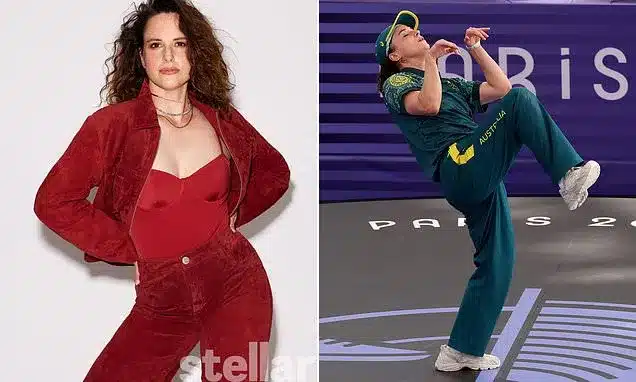
Two years after her Olympic debut transformed her into a global meme, Australian break-dancer Rachael Gunn is ready to share her side of the story. Known by her stage name “Raygun,” Gunn became an overnight sensation at the 2024 Paris Olympics, not for her athletic prowess, but for a performance that ignited widespread online mockery and conspiracy theories. Now, she is confronting the aftermath in a new Netflix documentary, aiming to reclaim her narrative from the viral storm.
From Viral Sensation to Online Target
Rachael Gunn’s journey to the Paris Olympics was a unique one. An academic by profession, she found herself thrust into the international spotlight after her six-minute breaking performance went viral. While the internet fixated on her distinctive “kangaroo poses” and the performance itself, the intense scrutiny took a significant personal toll. Gunn, who admitted to struggling with social anxiety, found herself at the center of relentless online ridicule.
The controversy escalated beyond simple mockery. Gunn and her husband, Samuel Free, who also served as her coach, became the subjects of baseless conspiracy theories. Accusations of cheating and unfair qualification for the Games circulated widely, casting a shadow over their Olympic participation and personal lives. This period was marked by significant distress, with Gunn describing a feeling of having no control over how she was perceived.
Untold Raygun: Breaking Badly – A Path to Closure
The upcoming Netflix documentary, titled Untold Raygun: Breaking Badly, represents a pivotal moment for Gunn. Unlike her initial interactions with the streaming service during the height of the scandal, she now feels emotionally prepared to discuss the experience. “I wouldn’t have been in a space to be able to talk about it, let alone laugh about it as much,” Gunn shared in an interview. She views the documentary as a form of closure, a chance to finally articulate her perspective after feeling drowned out by public opinion.
“So much of what happened was everyone else’s voices. I couldn’t cut through. People weren’t ready to listen. I had no control over the narrative,” Gunn explained. “Everyone thought they knew who I was, knew my motivations, knew my background – everything. This finally feels like I can move on with my life.” This marks a significant shift from the intense isolation she experienced, where the online pile-on made it difficult to even leave her home.
Rebuilding and Resilience
Gunn attributes her recovery to dedicated mental health support. Working with a psychologist and utilizing medication were crucial steps in processing the events of Paris and rebuilding her self-esteem. “I feel like finally, I can just be unapologetically me. It’s really empowering, freeing,” she stated. Her therapist, whom she consulted before the Olympics about her fear of being mocked, has continued to be a source of support.
The documentary also explores Gunn’s relationship with Samuel Free. The couple met in 2008 and built a life together, with Free eventually becoming her coach. The documentary features Gunn’s fellow B-girls who speak out against the cheating allegations, defending the couple against the unfounded claims. “We face everything together… he just keeps encouraging and supporting me,” Gunn said of Free. “It did bring us closer together because it was both of us being attacked.” She highlighted Free’s character as a caring and ethical disability support worker, emphasizing the pain of seeing their reputations unfairly tarnished.
The Pressure of Elite Sport
The documentary delves into the intense pressure that accompanied Gunn’s Olympic qualification. Both she and Free recognized that her unique, creative breaking style might not be competitive against the more power-focused routines of her rivals in Paris. This realization, coupled with the demands of elite competition, led to significant stress. Gunn experienced a panic attack in the Olympic Village and found that the joy of dancing was overshadowed by the pressures of training, gym workouts, and early morning drug testing.
“In the lead-up [to the Games], I wasn’t able to enjoy dancing,” she recalled. “My parents described it as a hobby, an amazing space where I was exploring myself. And then suddenly it was like an elite sport, and I was getting drug tested at 6 am. It just became a huge source of stress.”
Finding Strength in the Community
Despite the ordeal, Gunn’s passion for breaking remains undimmed. She refused to let the negative experience deter her from the activity she loves. “I’m not gonna let anything stop me from doing something I love,” she asserted. The breaking community has been a source of unwavering support, welcoming her back at every event.
Gunn expressed her deep appreciation for the breaking scene, describing it as a diverse and inclusive environment. “It’s such a diverse group of people – different jobs, backgrounds, languages, religions. We all come together. That’s what hip-hop is about: peace, unity, love, and having fun.” This sense of community has been instrumental in her healing process, reinforcing the positive aspects of the sport that initially drew her in.
Moving Forward
Through the documentary and ongoing personal work, Rachael Gunn is actively reshaping the narrative surrounding her Olympic experience. By sharing her journey, she aims to move beyond the viral mockery and conspiracy theories, highlighting her resilience and enduring love for breakdancing. Her story is one of overcoming adversity and finding empowerment by taking control of one’s own truth.