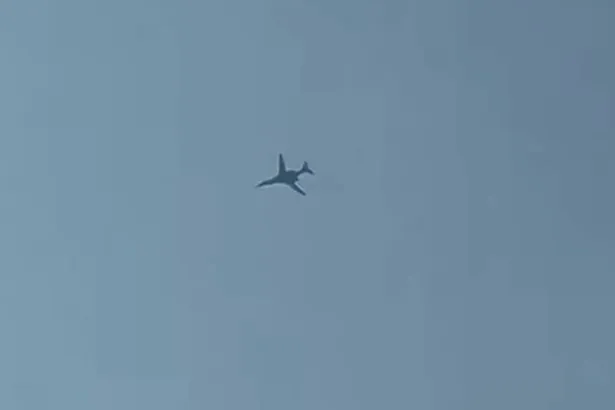
US bombers have reportedly departed from bases in the United Kingdom, signaling a potential escalation in the Middle East crisis. The aircraft’s departure occurred shortly after U.S. President Donald Trump issued warnings regarding potential strikes against Iran’s Pickaxe Mountain nuclear facility. This development follows the approval by the UK’s new Prime Minister, Andy Burnham, for American forces to utilize British military installations for specific operations targeting Iran.
Escalation in Middle East Tensions
The reported departure of U.S. bombers from the UK comes amid heightened tensions in the Middle East. According to reports originating from Iran, the aircraft left British soil shortly after President Trump communicated threats concerning the Pickaxe Mountain nuclear site. This facility, located approximately 140 miles south of Tehran, is known to house an underground tunnel network and is central to Iran’s nuclear program.
The decision by Prime Minister Burnham to permit the use of British bases for potential strikes against Iran mirrors a similar stance taken by his predecessor. This authorization is reportedly framed as allowing “defensive” actions rather than initiating active warfare. While an official statement from Burnham’s office has not yet been released, the move indicates a significant development in the UK’s involvement in the ongoing regional conflict.
Pickaxe Mountain: A Focal Point of Concern
President Trump had previously cautioned that the Iranian nuclear site at Pickaxe Mountain could be targeted if a diplomatic resolution to the current standoff was not achieved. The International Atomic Energy Agency (IAEA) has previously acknowledged Iran’s stated intentions regarding its nuclear operations at Pickaxe Mountain. IAEA Director-General Rafael Grossi had commented earlier this year that Iran’s plans included placing its most sensitive facilities underground, a strategy aimed at protecting them.
Iran’s nuclear capabilities have been a persistent source of international concern and a significant factor in the ongoing conflict. The current phase of the war reportedly began in February when the United States and Israel conducted joint strikes on several key Iranian locations. This action prompted Iran to retaliate by disrupting maritime traffic through the Strait of Hormuz and launching strikes on various sites across the region.
Diplomatic Efforts and Recent Setbacks
In an effort to de-escalate the situation and find a path toward peace, the United States and Iran had entered into a Memorandum of Understanding (MoU) the previous month. The stated objective of this agreement was to conclude the conflict within a 60-day timeframe and to establish a lasting peace deal. Key aims of the MoU included the resumption of international shipping through the Strait of Hormuz and the resolution of disputes surrounding Tehran’s nuclear program.
However, recent developments indicate a significant setback for these diplomatic efforts. Iran has announced its complete withdrawal from the MoU, alleging violations by the United States. Concurrently, President Trump declared that the ceasefire agreement was no longer in effect. These actions have cast further uncertainty over the prospects for a peaceful resolution.
Bilateral Discussions and Strategic Priorities
Details of a recent conversation between President Trump and Prime Minister Burnham were shared by the U.S. President. According to Trump, the discussion covered several critical areas, including North Sea oil, trade relations, the broader military alliance between the two nations, and efforts related to the demining of the Strait of Hormuz. These topics highlight the multifaceted nature of the bilateral relationship and the shared strategic interests between the U.S. and the UK in regional security and economic stability.
Background of the Conflict
The current Middle East crisis has complex roots, involving long-standing geopolitical tensions and disputes over Iran’s nuclear program. The disruption of the Strait of Hormuz, a vital waterway for global oil transport, has had significant economic repercussions and heightened international security concerns. The initial U.S. and Israeli strikes, followed by Iranian retaliation, marked a critical escalation, leading to the current state of heightened alert and diplomatic maneuvering.
The Role of International Oversight
The International Atomic Energy Agency (IAEA) plays a crucial role in monitoring Iran’s nuclear activities and verifying compliance with international agreements. Its assessments of Iran’s nuclear program, including the placement of sensitive facilities underground, are closely watched by the international community. The agency’s mandate is to ensure that nuclear materials are not diverted for military purposes and to promote the peaceful use of nuclear energy.
Conclusion
The reported departure of U.S. bombers from the UK, coupled with Prime Minister Burnham’s approval of base usage for operations against Iran, signifies a critical juncture in the escalating Middle East crisis. While diplomatic channels have faced recent setbacks, the ongoing dialogue between the U.S. and UK, as well as international oversight bodies, remains crucial in navigating the complex challenges posed by Iran’s nuclear program and regional instability. The situation underscores the delicate balance between security concerns and the pursuit of a lasting peace.